

Full-Stack Development Company for End-to-End Web Applications
One team that owns your product from the interface to the database, so there are no gaps between front-end, back-end and infrastructure. We plan the architecture, build across the whole stack, integrate the systems you depend on, and keep it running after launch. And we have shipped real platforms end to end, including an enterprise e-learning system with SAP integration, an AI-proctored engineer assessment platform, SaaS school platform, HR platform and Wellness app.The stack we own, end to end
Full-stack means we take responsibility for every layer of your product and how they fit together:
- Front-end, the interface your users see and interact with.
- Back-end, the business logic and services that run behind it.
- APIs, the contracts that connect the front-end, third parties and mobile clients.
- Database, where your data is modeled, stored for speed and security.
- Cloud and DevOps, the infrastructure, pipelines and monitoring that ship and run it all.
Full-stack development services
Product and architecture consulting
We define what to build, choose the stack, and design an architecture that holds up as the product grows.Custom web application development
We build web applications tailored to your workflows, from the interface through to the data model.API development and integration
We design and build REST and GraphQL APIs, and integrate the third-party and enterprise systems your product relies on.Database design and management
We model, index and secure your data so the application stays fast and reliable as it scales.AI and ML integration
Where it adds value, we build AI and machine-learning features into the product, which we also provide as a dedicated service.Cloud, DevOps and deployment
We deploy to your cloud with CI/CD, monitoring and safeguards, so releases are stable and predictable.Support and maintenance
We keep the product healthy after launch with updates, fixes and new features.Front-end, back-end and the API layer
A full-stack product is only as good as how well its three core layers work together.Front-end. We build responsive, accessible interfaces with modern frameworks, focused on usability, performance and consistency across devices and browsers.Back-end. We build the business logic and services with clean, modular architecture and security designed in, so the system stays reliable as traffic and data grow.API layer. We design clear, versioned APIs so the front-end, mobile apps and third-party services all talk to the back-end consistently, without friction.
Technology stacks we build in
We choose the stack to fit the product, not the other way around. In practice we work most in the JavaScript /TypeScript and MERN ecosystem: React and Next.js on the front-end, Node.js, Express, Redis and GraphQL on the back-end, and MongoDB or PostgreSQL for data. We pair React with Python where a product leans on data or AI, and we deploy on AWS, Azure or Google Cloud. The point is a cohesive, integrated stack that keeps technical debt down, not a pile of tools that do not fit.
Built to scale and stay secure
We architect for scale and security up front, rather than retrofitting them later. We use a modular architecture so features stay isolated and easy to change, role-based access control (RBAC) so users only access the data they're permitted to, and secure, authenticated APIs to protect every integration point. CI/CD pipelines, automated tests and monitoring keep releases safe and let us catch issues before your users do.
Where full-stack development fits
Startups building an MVP end to end
To validate fast without stitching specialists together.Multi-user platforms
With admin systems, roles, and real-time analytics dashboards.E-learning and assessment platforms
That combine content, testing and reporting.Enterprise tools
That must integrate with legacy or ERP systems such as SAP.SaaS products
That need frontend, backend and infrastructure built as one.Full-stack platforms we have shipped
Spirituality, React Native/iOS/Android
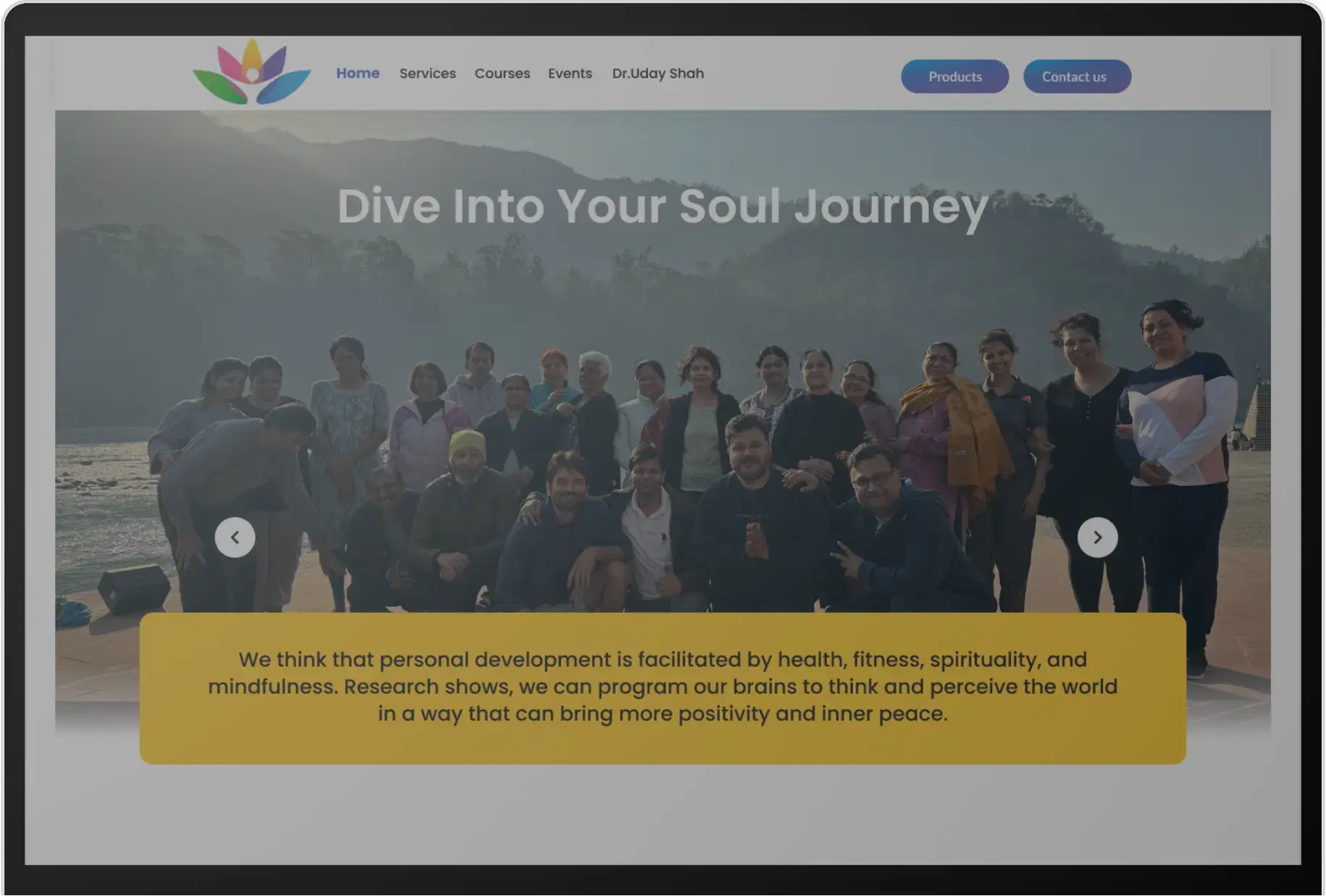
Sai Karuna Mission
Sai Karuna Mission(SKM) is a spiritual research organisation where they research on Aura and guide people about the cause of their problems and teach them theta/delta level meditations to overcome those problems.- Tech stack: React Native, iOS, Android
- Industry: Spirituality
Education, LMS/WebApp
Holistic Performance Improvement Consultants Pvt. Ltd.
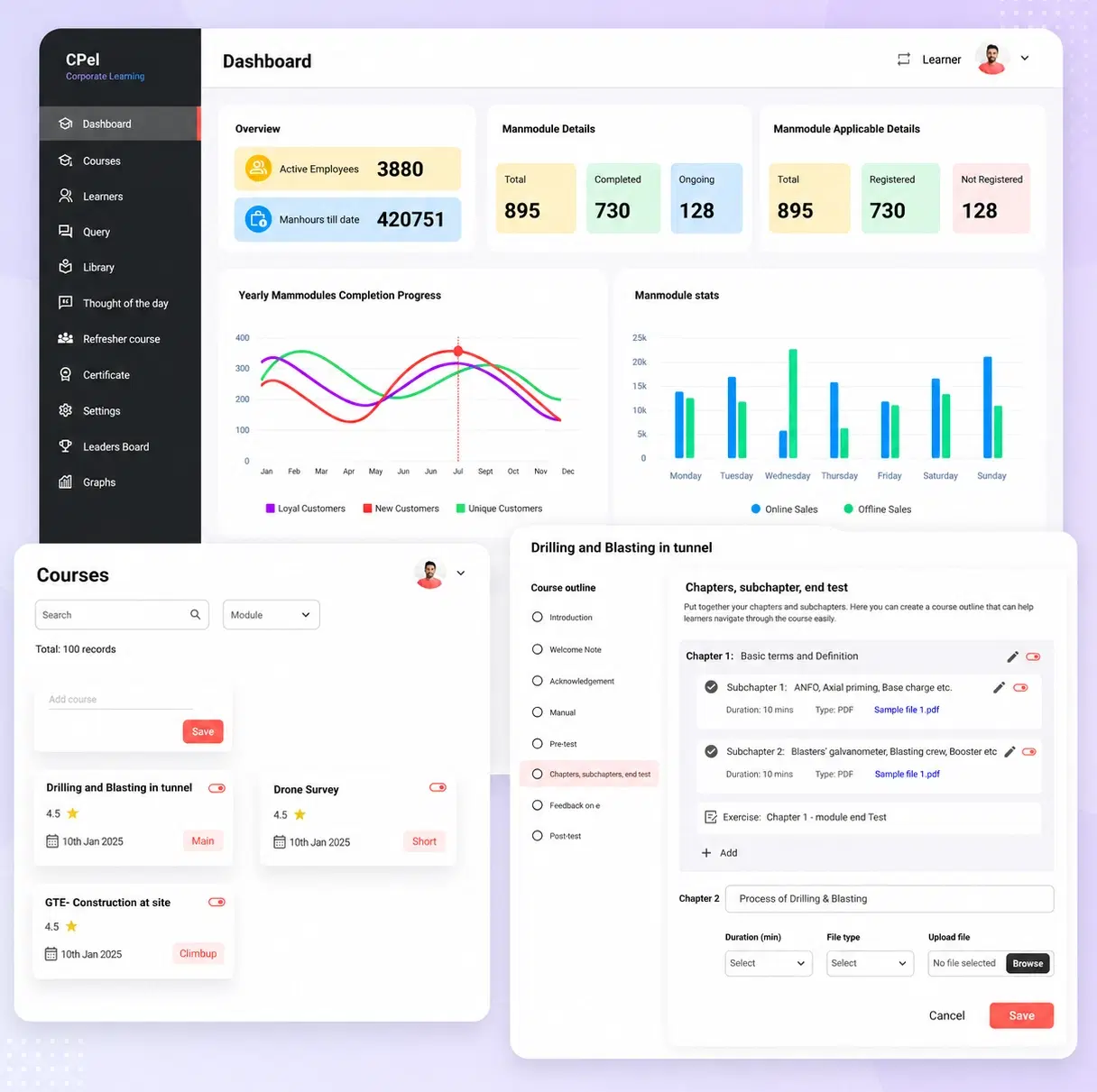
CPeL is an inclusive enterprise-based e-learning platform built for a leading Indian infrastructure company to enable self-paced learning across its entire workforce. Learners can sign up for courses, study material at their own pace, give tests and interact with peers on a community forum. This web application includes mandatory course tracking mapped to employee grade, department, and business unit via SAP integration, with a full-featured admin system covering course uploads, randomised test sets, automated progress-based email workflows, leaderboards, and a real-time analytics dashboard.- Tech stack: LMS, WebApp
- Industry: Education
Education, AI/WebApp
Civil Engineer Evaluation System
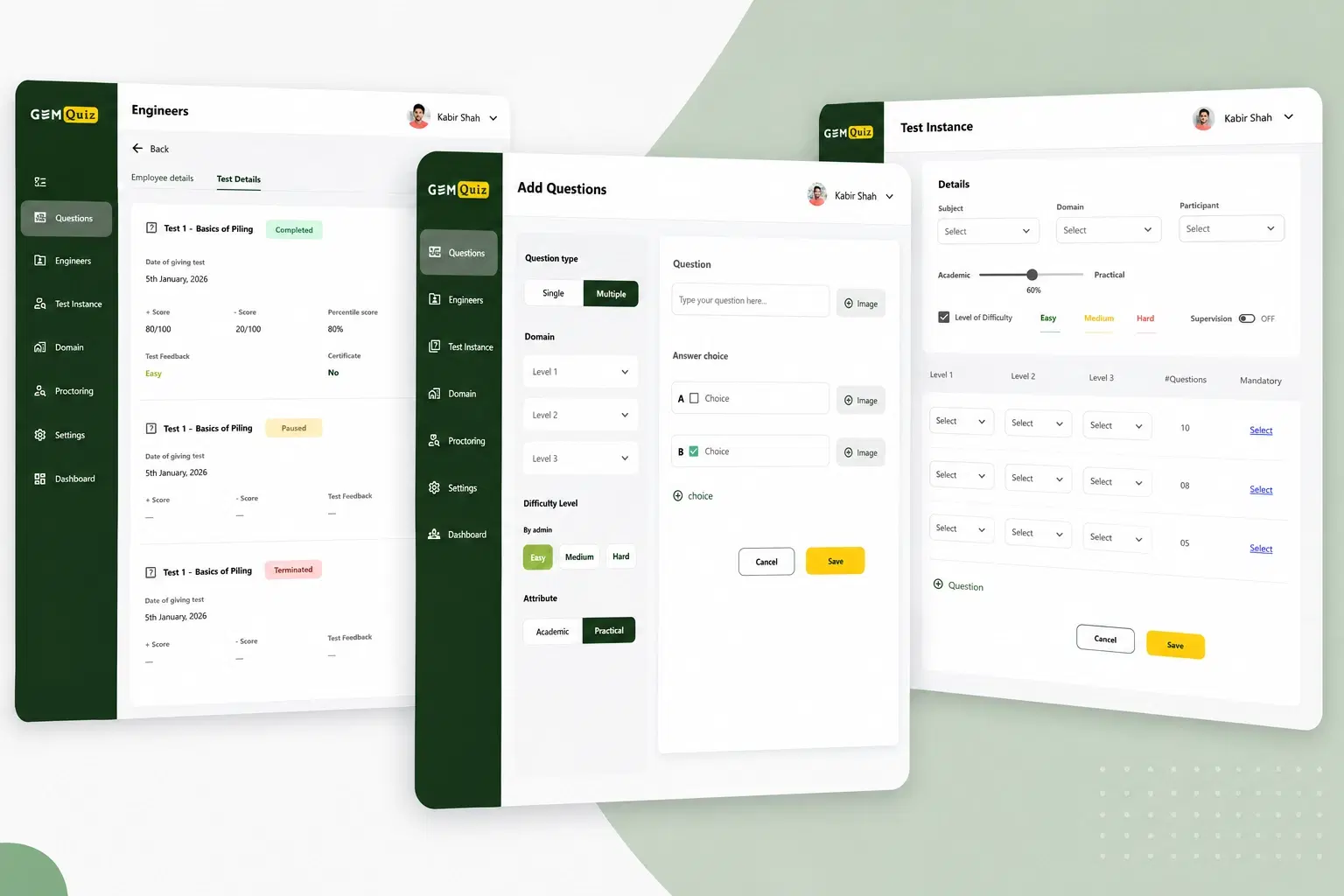
A specialised online assessment platform built to evaluate civil engineers through timed, randomised tests with AI-based proctoring. The system features a structured question bank where each test instance is unique to every candidate. Admins get full control over test creation, webcam-based proctoring with a strike-based violation workflow, and automated reports covering individual scores, percentiles, and monthly performance summaries.- Tech stack: AI, WebApp
- Industry: Education
Human Resources, WebApp
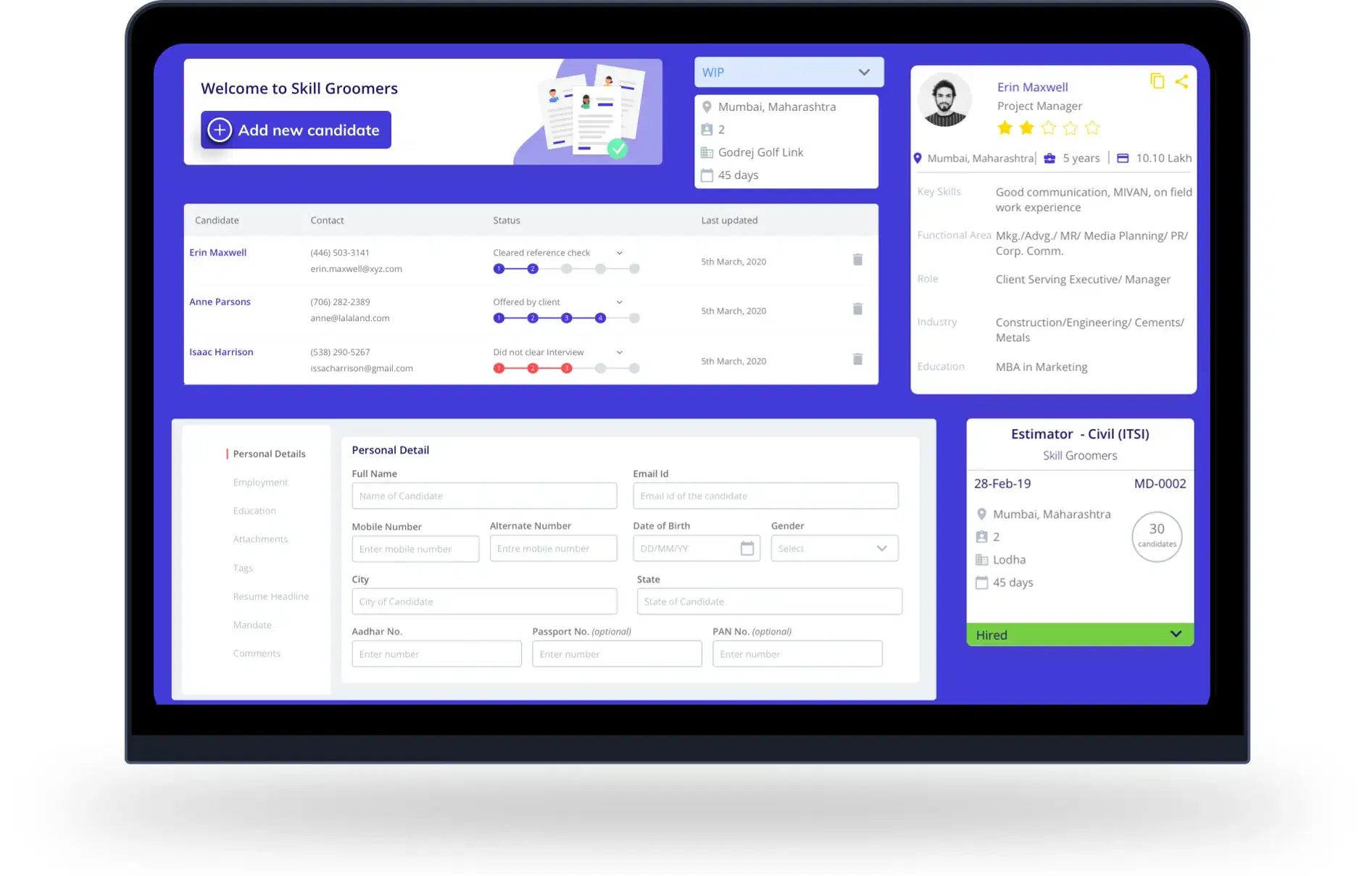
Skillgroomers
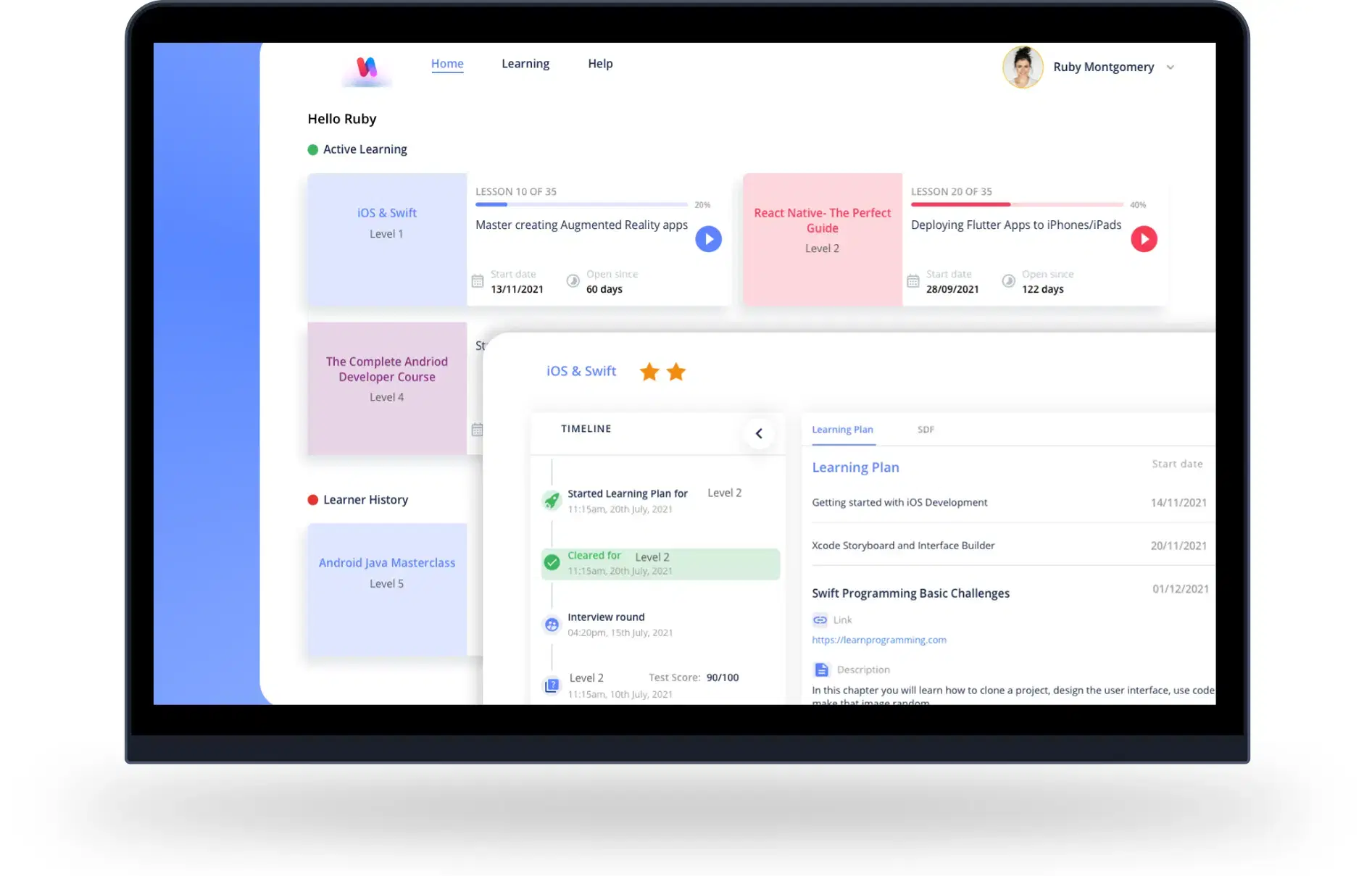
Skill Groomers, is a HR company, and has been in business for the past 11 years. Their main challenge was to manage and organise the database of resumes. They were using additional HR websites for their hiring process but it was not efficient. They were looking for an easy and smart solution to organise their HR process and generate reports for their top level management.- Tech stack: WebApp
- Industry: Human Resources
What shapes cost and timeline
We keep pricing conversational, and we start by agreeing the model that fits: a fixed scope where requirements are clear, or time-and-materials where the product is still evolving. From there, the main drivers are feature and workflow complexity, the integrations involved (SAP, payments, CRM, analytics), the number of user roles and permissions, data volume, and the infrastructure. We work in sprints so you see a working system early and can adjust before it grows.
How we build
1
Discovery
Goals, users, constraints and the systems we need to integrate with.2
Architecture & Data Modeling
Architecture and data modeling across the whole stack.3
Development
Build in sprints, front-end and back-end together, layer by layer.4
Integration
Integrate APIs, enterprise systems and third-party services.5
Testing & Quality Assurance
Test across the stack for function, performance and security.6
Deployment & Launch
Deploy to your cloud with CI/CD and monitoring.7
Maintenance & Continuous Improvement
Maintain and extend the product after launch.Why Crescibit for full-stack
One Team, Every Layer
One team owns front-end, back-end and data, so there are no handoff gaps between layers.Proven End-to-End Delivery
We have shipped real full-stack platforms end to end, including enterprise SAP integration, AI-based features, OAuth logins, payment gateway integrations.Senior Team, Directly Involved
You work directly with senior developers.Long-Term Partnership
We stay involved after launch for updates and new features.Frequently asked questions
Everything needed to build a complete product: the front-end interface, the back-end logic and APIs, the database, integrations and deployment, designed to work together as one system rather than separate parts.
A single team owns how the layers fit together, which means faster decisions, fewer handoff problems and clear accountability. The product evolves as one system, not a set of disconnected pieces.
We work mainly in the JavaScript and TypeScript ecosystem, React and Next.js, Node.js, Express, Redis and GraphQL, with MySQL, MongoDB or PostgreSQL, often called the MERN stack, and we pair React with Python for data or AI-heavy products. We choose the stack to fit your product and team.
Yes. We have shipped platforms with SAP integration, and we regularly connect products to payment gateways, CRMs, analytics and other third-party services through secure APIs.
Yes. We assess what can be reused, identify the gaps, and consolidate the system in stages, so we modernize without disrupting what your users rely on.
We design with a modular architecture, role-based access control, secure authenticated APIs, encryption in transit, and CI/CD with automated tests and monitoring, so the app scales and stays protected as it grows.
Fixed scope where requirements are clear, time-and-materials where the product is still evolving, and dedicated-team engagements for ongoing work. We agree the model up front so cost stays predictable.
We test continuously across the stack, from unit and integration tests to performance and security checks, so the product is stable before launch.
You do. You get full ownership of the source code and IP, and we are happy to work under an NDA.
We stay involved with maintenance, performance improvements and new features as your product and usage grow.
Explore our other services
We work across the whole product lifecycle, so most projects touch more than one service.
Product Development
Mobile App Development